

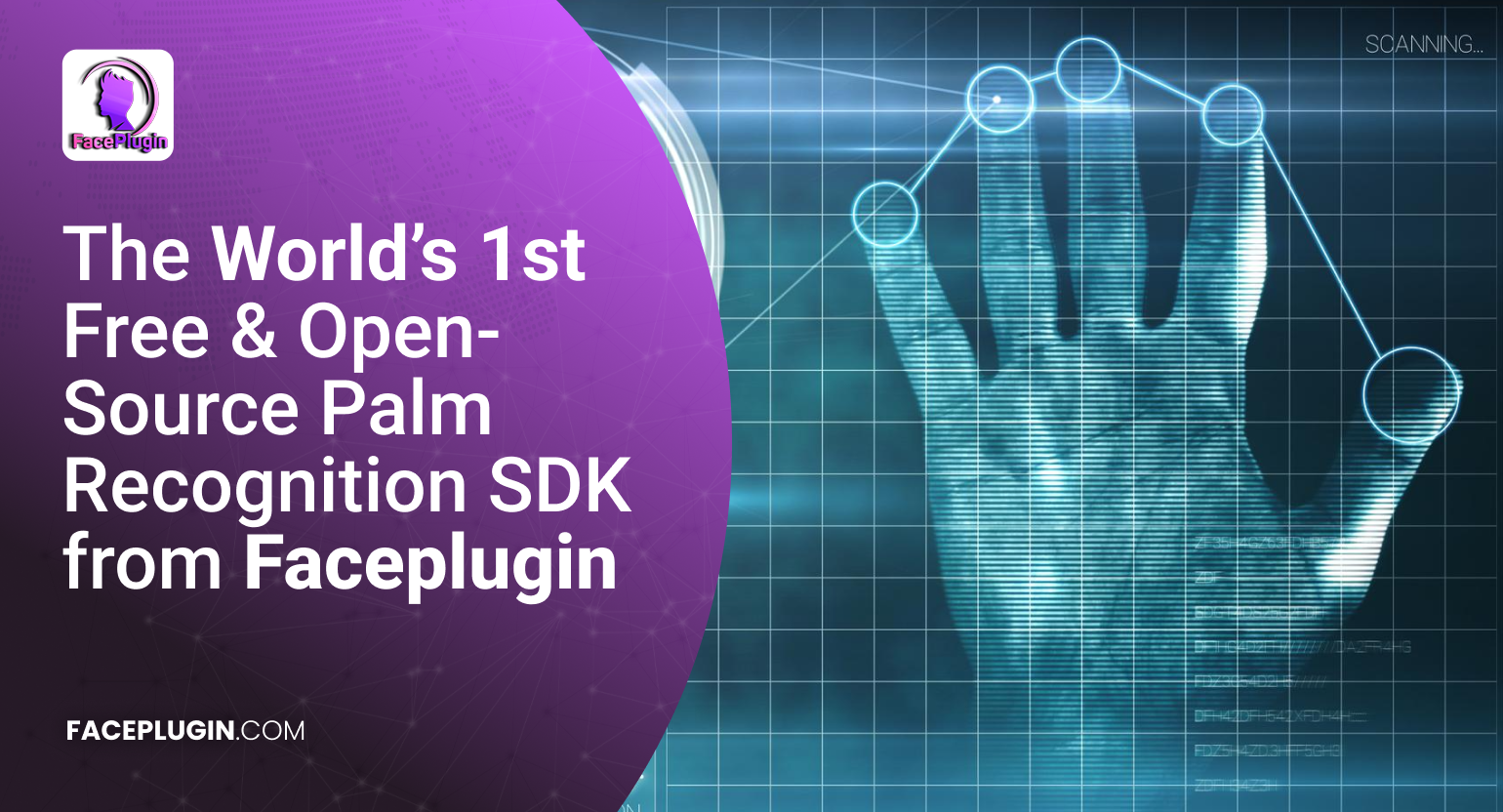
The Future of Identity Verification with Faceplugin’s Palm Recognition SDK
Biometric authentication has evolved rapidly over the last decade, transforming the way humans unlock devices, secure sensitive data, and verify identity in digital and physical environments. From passwords to fingerprint scans to facial recognition, each technological wave brought improved security, speed, and convenience. But the next chapter of biometric innovation is already here — and it’s written in the palm of your hand.
Welcome to Palm Recognition, a groundbreaking biometric modality that uses the unique patterns of veins, texture, geometry, and micro-features in the human palm to authenticate identity with exceptional accuracy. As industries demand stronger anti-spoofing defenses and faster, more scalable verification methods, palm biometrics is emerging as the next gold standard.
In this extensive 4,000-word guide, we explore the science, technology, use cases, implementation strategies, and future of palm recognition — and how Faceplugin’s Palm Recognition SDK is empowering developers, governments, and enterprises to build secure, touchless, privacy-centric systems at scale.
Table of Contents
Introduction: The Rise of Palm Biometrics
What Makes Palm Recognition So Unique?
Why Palm Recognition Is More Secure Than Traditional Biometrics
Understanding Palm Biometrics: Vein Patterns vs. Palmprints
How Palm Recognition Technology Works
Palm image acquisition
Feature extraction
Deep learning embedding generation
Matching and decision
Faceplugin's Palm Recognition SDK: Features & Capabilities
Touchless Palm Recognition: The New Standard
Security Advantages: Anti-Spoofing & Liveness Detection
Real-World Use Cases Across Industries
How Developers Can Build Their Own Palm Recognition App
On-Device Processing and Privacy Protection
Performance Benchmarks and Accuracy Measures
Challenges and Limitations of Palm Recognition
Future Trends and Innovations in Palm Biometrics
Why Choose Faceplugin for Palm Recognition?
Conclusion
1. Introduction: The Rise of Palm Biometrics
As digital transformation accelerates globally, businesses face a growing challenge: how to authenticate users reliably without compromising privacy or user experience. Traditional methods — passwords, tokens, swipe cards — are either insecure or inconvenient. Biometric authentication emerged as a revolutionary solution, but not all biometrics are created equal.
Fingerprint recognition struggles with worn-out or damaged skin. Face recognition can be affected by lighting conditions or subject to spoofing without proper liveness mechanisms. Iris recognition, while highly accurate, requires specialized hardware and may feel intrusive.
Palm recognition, however, addresses all these limitations.
Palm biometrics provides:
Larger surface area → richer feature set
Sub-dermal vein pattern → impossible to steal or replicate
High user acceptance → intuitive and non-intrusive
Touchless design → hygienic and pandemic-ready
Robust performance → works in varying conditions
As organizations seek secure, frictionless, hygienic alternatives, palm recognition is rapidly becoming essential — from border control to fintech onboarding to workforce management.
Faceplugin, a leader in biometric AI, brings this technology to developers through its Palm Recognition SDK, enabling high-performance identity verification across Android, iOS, embedded devices, browsers, kiosks, and large-scale enterprise systems.
2. What Makes Palm Recognition So Unique?
Palm recognition is more than just scanning a hand — it analyzes multiple layers of identity signals, including:
1. Palmprint (surface-level features)
Skin texture
Ridge patterns
Creases and wrinkles
Geometric shape
2. Palm vein (sub-dermal features)
Vein density
Vein branching structure
Hemoglobin-based absorption patterns in near-infrared
3. Contactless depth features (touchless)
3D contours
Depth map and spatial structure
This multi-feature biometric approach offers one of the highest security levels among existing modalities.
Additionally:
Palm veins cannot be photographed with a regular camera.
They are extremely stable even as a person ages.
They remain unchanged even with minor injuries or surface variations.
For enterprises needing unbreakable, long-term biometric identity tracking, palm recognition is often superior to fingerprints, face, iris, or voice.
3. Why Palm Recognition Is More Secure Than Traditional Biometrics
Let’s compare palm biometrics with other popular methods:
Biometric TypeSecurity LevelSpoofing ResistanceStability Over TimeUser Experience | ||||
Fingerprint | Medium | Moderate | Low–Medium | Good |
Face Recognition | High (with liveness) | Medium | Medium | Excellent |
Iris Scan | Very High | High | High | Intrusive |
Voice | Low | Very Low | Low | Good |
Palm Recognition | Very High | Very High | Very High | Excellent |
Palm recognition is nearly impossible to forge because:
Vein patterns are invisible to the naked eye
They require blood flow to detect
They cannot be lifted from surfaces
They are deeply encoded inside tissue
They are inherently multi-factor (geometry + print + vein)
When combined with Faceplugin’s AI-powered liveness detection, the system offers unmatched fraud prevention, even against advanced attacks like:
3D printed hands
Latex prosthetics
High-resolution images
NIR spoofing devices
Video replay attacks
This layered security makes palm biometrics ideal for high-risk environments such as banking, border control, government ID verification, and healthcare.
4. Understanding Palm Biometrics: Vein Patterns vs. Palmprints
Palmprints (Surface Features)
These include visible creases, ridges, shape, and skin texture. Captured by RGB cameras, palmprints offer an excellent dataset for recognition but can be influenced by:
Dirt
Moisture
Lighting conditions
Palm Veins (Subsurface Features)
Captured using near-infrared (NIR) imaging, vein recognition analyzes the absorption of NIR light by hemoglobin-rich blood vessels.
Palm vein patterns are:
Completely invisible to the naked eye
Highly stable throughout life
Unique even between identical twins
Faceplugin’s Palm Recognition SDK can operate using:
RGB-only palmprint models
NIR + RGB hybrid models
Pure NIR palm vein models
This flexibility allows enterprises to choose the right solution based on hardware, accuracy needs, and environmental conditions.
5. How Palm Recognition Technology Works
Palm recognition uses advanced computer vision and deep learning to authenticate identity. The process includes several key stages:
Step 1: Image Acquisition
Faceplugin’s SDK supports:
Smartphone cameras
Industrial NIR cameras
Time-of-flight sensors
Depth cameras
Kiosk-mounted capture modules
To ensure high accuracy, the system performs:
Automatic palm detection
Illumination normalization
Motion stabilization
Auto-exposure optimization
Step 2: Palm Segmentation
The SDK isolates the palm region and removes background, fingers, and noise using:
Semantic segmentation networks
Boundary detection
Palm ROI extraction
This ensures consistent input for the recognition model.
Step 3: Feature Extraction
Using deep convolutional neural networks (CNNs) and transformer-based architectures, Faceplugin extracts:
Ridge flow maps
Texture features
Micro-level wrinkle patterns
Vein contrast features (for NIR)
3D surface depth characteristics
These features are converted into an embedding vector, typically 128–512 dimensions.
Step 4: Matching and Identity Decision
Faceplugin applies:
Cosine similarity
Distance thresholding
Neural match scoring
Anti-spoofing probability layers
The result:
1:1 Verification — “Is this the same person?”
1:N Identification — “Find this person in the database.”
Faceplugin’s Palm SDK can match millions of entries with millisecond-level performance.
6. Faceplugin’s Palm Recognition SDK: Features & Capabilities
The SDK provides everything developers need to seamlessly integrate palm recognition into their applications.
Key Features
✓ Touchless palm capture
✓ RGB + NIR dual mode
✓ On-device processing
✓ Offline functionality
✓ Fast liveness detection
✓ Anti-spoofing
✓ Real-time palm tracking
✓ ISO-compliant template creation
✓ Developer-friendly mobile & web APIs
✓ Support for Android, iOS, Web, Windows, Linux
Performance Metrics
Accuracy: >99% true accept rate
False Accept Rate (FAR): as low as 0.0001%
Speed: <150ms recognition time
Environment tolerance: works in low light, daylight, and variable backgrounds
Developer Integration
Android Studio (Java/Kotlin)
iOS (Swift)
Flutter
React Native
Web JavaScript
Server-side SDKs (Python, Node.js, Go)
With comprehensive documentation, sample apps, and enterprise support, Faceplugin ensures a smooth integration journey.
7. Touchless Palm Recognition: The New Standard
Post-pandemic, hygiene concerns accelerated the shift toward touchless biometrics. Fingerprint scanners that require physical contact are no longer ideal.
Touchless palm recognition offers:
Zero contact → better health safety
Faster interaction → no need to precisely place hand
Lower maintenance → no smudges, no wear
Higher durability → nothing to clean or replace
Workflow continuity → works for wet or dirty hands
By eliminating physical touch, palm recognition dramatically improves both usability and safety — essential for high-traffic environments like airports, hospitals, and schools.
8. Security Advantages: Anti-Spoofing & Liveness Detection
Faceplugin’s SDK includes advanced Palm Liveness Detection, which prevents:
1. Printed palm attacks
Low resolution → easily flagged.
2. High-resolution photo attacks
Texture analysis flags inconsistencies.
3. 3D mask or prosthetic attacks
Depth-based neural models detect unnatural geometry.
4. Replay attacks
Movement-based analysis detects loops.
5. NIR spoofing attempts
Vein-flow modeling detects lack of blood flow.
The SDK uses AI models trained on millions of real and synthetic samples to ensure reliability under all conditions.
9. Real-World Use Cases Across Industries
The versatility of palm recognition allows deployment across numerous sectors:
Banking & Fintech
KYC verification
ATM authentication
Mobile banking login
Fraud prevention
Healthcare
Patient identification
Prescription control
Access to restricted medical labs
Government & Border Control
National ID programs
Passport verification
Social welfare disbursement
Workforce Management
Time & attendance
Shift management
Restricted area access
Education
Exam verification
Library access
Attendance tracking
Transportation & Smart Cities
Public transit access
e-Gates
Secure building entry
Retail & Hospitality
Loyalty program check-in
Hotel room access
Cashless payments
Palm recognition’s speed, security, and hygiene make it suitable for both high-security and consumer-facing applications.
10. How Developers Can Build Their Own Palm Recognition App
Developers can integrate Faceplugin’s SDK in just a few simple steps:
Step 1: Install the SDK
For Android:
implementation 'com.faceplugin:palm-sdk:latest'For iOS:
pod 'FacepluginPalm'Step 2: Initialize the SDK
PalmEngine.init(context, apiKey)
Step 3: Capture Palm Image
PalmEngine.startPalmCapture(cameraView)
Step 4: Generate Embeddings
val embedding = PalmEngine.extractFeatures(palmImage)
Step 5: Compare & Match
val score = PalmEngine.match(embedding1, embedding2)
Step 6: Add Liveness Detection
PalmLiveness.check(frame) { result ->
    if (result.isLive) { ... }
}
With these steps, developers can build:
Attendance systems
Access control apps
KYC verification apps
Secure mobile login
Fintech onboarding tools
The SDK is lightweight and optimized for real-time performance even on mid-range devices.
11. On-Device Processing and Privacy Protection
Faceplugin prioritizes user privacy, ensuring that:
All biometric data can be processed on-device
No images need to leave the user’s device
No internet connection is required
Developers control whether to store or discard templates
This approach is essential for:
GDPR compliance
ISO 27001 environments
Banking-level privacy
Government use cases
Healthcare systems
Faceplugin supports homomorphic encryption and differential privacy methods for enterprise deployments.
12. Performance Benchmarks and Accuracy Measures
Faceplugin regularly benchmarks its models using:
1. FAR (False Accept Rate)
Measures how often unauthorized users are accepted.
2. FRR (False Reject Rate)
Measures how often real users are rejected.
3. EER (Equal Error Rate)
Balance point — lower is better.
4. FMR/FNMR standardized metrics
For government-grade ID systems.
5. Real-time speed
Measured on ARM processors and GPUs.
Results consistently demonstrate:
World-class anti-spoofing
High accuracy under poor lighting
Ultra-low latency
Top-tier usability scores
13. Challenges and Limitations of Palm Recognition
Despite its advantages, palm recognition faces challenges:
Image capture difficulty
Some users may not hold their hand properly.
Device variations
Low-quality smartphone cameras can reduce accuracy.
Environmental issues
Bright sunlight may cause exposure problems in RGB mode.
User education
Some users are unfamiliar with palm scanning.
NIR hardware availability
Vein-based systems require specialized cameras.
Faceplugin addresses these challenges with:
Auto-capture guidance
Camera parameter optimization
Multi-frame fusion
Hybrid RGB/NIR models
Continuous AI retraining
14. Future Trends and Innovations in Palm Biometrics
Palm recognition is expected to evolve significantly over the next decade:
1. Universal palm authentication for mobile apps
Banking, messaging, fintech login.
2. Embedded palm recognition in smart doors & IoT devices
3. Multi-modal fusion
Palm + face + voice + fingerprint.
4. Decentralized biometric identity (DID)
Palm templates stored in secure blockchain wallets.
5. Palm recognition in AR/VR
Using hand-tracking cameras inside VR headsets.
6. Continuous authentication
Palm recognition for seamless workplace security.
Faceplugin is actively researching:
4D vein-flow modeling
Palmprint-vein fusion networks
Ultra-fast mobile inference
Cross-device palm ID portability
15. Why Choose Faceplugin for Palm Recognition?
Faceplugin stands out because of:
✓ Enterprise-grade accuracy
Trained on millions of diverse palm samples.
✓ High-speed on-device inference
Ideal for real-time systems.
✓ Industry-leading anti-spoofing
Prevents even advanced deepfake & prosthetic attacks.
✓ Easy integration
Mobile, web, cloud, and kiosk SDKs.
✓ Global support & documentation
Trusted by fintechs, governments, and Fortune 500 companies.
✓ Custom model training
For specialized hardware or regional datasets.
With Faceplugin, developers can build fast, scalable, and secure palm-based identity systems in record time.
16. Conclusion
Palm recognition is one of the most secure, user-friendly, and future-ready biometric technologies available today. Its combination of touchless convenience, vein-level security, and high accuracy makes it invaluable across industries — from fintech onboarding to border control, smart city infrastructure, workforce authentication, and beyond.
Faceplugin’s Palm Recognition SDK enables organizations to embrace this cutting-edge technology with ease. With its real-time performance, on-device privacy, robust liveness detection, and extensive platform support, Faceplugin empowers developers and enterprises to build next-generation identity solutions that are not only secure but also intuitive and scalable.
As the world continues moving toward passwordless authentication and touchless security, palm biometrics will play a defining role in shaping the future. And Faceplugin stands at the forefront of this transformation — delivering AI innovations that keep users safe, businesses compliant, and systems protected against evolving threats.